


Pain in the back and neck occurs periodically in every person.This may be due to recent physical activity, a sedentary lifestyle, or the presence of serious spinal pathologies.
To find out the cause of pain and possible complications of diseases, you should undergo a medical examination on time.Often the cause of severe back pain can be a herniated disc or serious damage to the spine due to injury.
In elderly patients, pain in the lumbar region is associated with degenerative bone diseases.In the future, the development of the disease will lead to the need for surgical intervention when drug treatment does not bring the expected effect.Therefore, you should not put off going to the doctor or determine the pathology yourself.
Symptoms
Painful sensations begin to appear in the cervical region, after which they move to the shoulders and the area between the shoulder blades.In this case, the patient experiences pain when moving the head or shoulder joint.In the future, such manifestations become more and more intense, and the person feels stiffness when turning his head.
The main symptoms that a person has serious pathologies of the spine are:
- numbness of the shoulder joint and neck muscles;
- periodic aching sensations in the upper back;
- muscle tension;
- clicking and characteristic sounds of joints;
- restriction in free movement of the shoulder, which occurs after sleep;
- tingling sensation in soft tissues;
- sharp shooting from different sides of the back;
- discomfort around the ligaments and neck.
When these symptoms occur, a person begins to think about why the back and neck may hurt and what needs to be done to get rid of the discomfort.In such cases, you should know the main reasons and proceed to therapy in time.

Causes
Unpleasant sensations in the back and neck area in most cases occur due to muscle spasms and vertebral subluxations.They are quite difficult to notice during a general examination by a doctor, so a more effective diagnosis is necessary.Computed tomography and magnetic resonance imaging are often prescribed, which visualize even minor structural changes.The first technique is well suited for studying the bone formations of the spine, and MRI allows you to find out why muscles and soft tissues hurt.
Muscle spasms
The main reason for pain in the back is considered to be muscle spasms.They can occur over time after a minor spasm develops into a serious muscle strain.The following factors may be the reason:
- prolonged stay in uncomfortable positions;
- incorrect position during sleep;
- heavy physical activity and vigorous activities;
- hypothermia, which causes inflammation in the muscles.
Even a small draft can cause muscle spasms.Improper use of air conditioning and high temperature changes lead to inflammation of muscle tissue.
Vertebral subluxation
In case of mechanical damage, the vertebra moves towards the adjacent one.Typically, this phenomenon occurs in cases of severe injuries during car accidents.Subluxations are accompanied by damage to the ligamentous apparatus, muscle tension and pinching of the joint capsule.The doctor can recognize the pathology by severe pain during palpation, when turning the head and moving the neck.
Surgeons and traumatologists treat subluxations.A person can straighten a vertebra on his own, but only after highly qualified consultation with a specialist.In mild cases of pathology, immobilization with a Shants collar is prescribed for a month.

Osteochondrosis of the cervical spine
Another cause of nagging and aching pain in the neck can be osteochondrosis.This is a degenerative disease of the spine that occurs due to metabolic disorders.The cervical part has a weak muscle corset, due to which a large load is placed on the vertebrae.As a result, the vertebral artery is compressed, and the necessary nutrition of important brain structures does not occur.
The causes of osteochondrosis can be the following factors:
- impaired metabolism;
- sedentary lifestyle;
- genetic predisposition;
- hypothermia;
- prolonged stay in uncomfortable positions;
- obesity.
To prevent the occurrence and further development of osteochondrosis, it is enough to do gymnastic exercises and follow the doctor’s prescriptions.
Intervertebral hernia
Intervertebral hernia is an inflammatory and degenerative disease that is accompanied by deformation of the intervertebral disc and rupture of the fibrous ring.Intervertebral discs play the role of shock absorbers, reducing the destructive effect of the vertebrae on each other.
Over time, they can lose their elasticity and flexibility, causing severe pain and discomfort.If an intervertebral hernia occurs, the patient may experience frequent headaches and muscle pain.Insufficient nutrition of the brain causes dizziness, weakness and constant drowsiness.
Possible complications
Even minor pain can later affect a person’s health or cause serious complications that require immediate surgical intervention.Ignoring inflammatory and degenerative diseases leads to pathologies of the vascular system, severe throbbing pain and disruption of brain function.
Once the vertebral artery is pinched, the person experiences weakness, fatigue, visual hallucinations, and other symptoms.If the patient does not seek medical help in time, diseases such as cerebral ischemia and stroke may occur.Over time, they can be fatal.
Diagnosis of pathologies
After examination, the doctor prescribes one of the diagnostic research methods for a broader understanding of the pathology.For mechanical injuries and damage to the vertebrae, a CT scan (computed tomography), which is based on X-rays, is prescribed.X-rays are detected in all tissues of the body and are displayed differently on the monitor screen.The specialist receives several dozen layer-by-layer images with a three-dimensional image of the bone structures of the spine.
The method has its contraindications.During pregnancy and lactation, it is better to choose MRI (magnetic resonance imaging), which uses electromagnetic waves to identify degenerative diseases and soft tissue pathologies.Modern tomographs allow you to obtain high-quality images of all parts of the back in a few minutes and find out why your back and neck hurt.
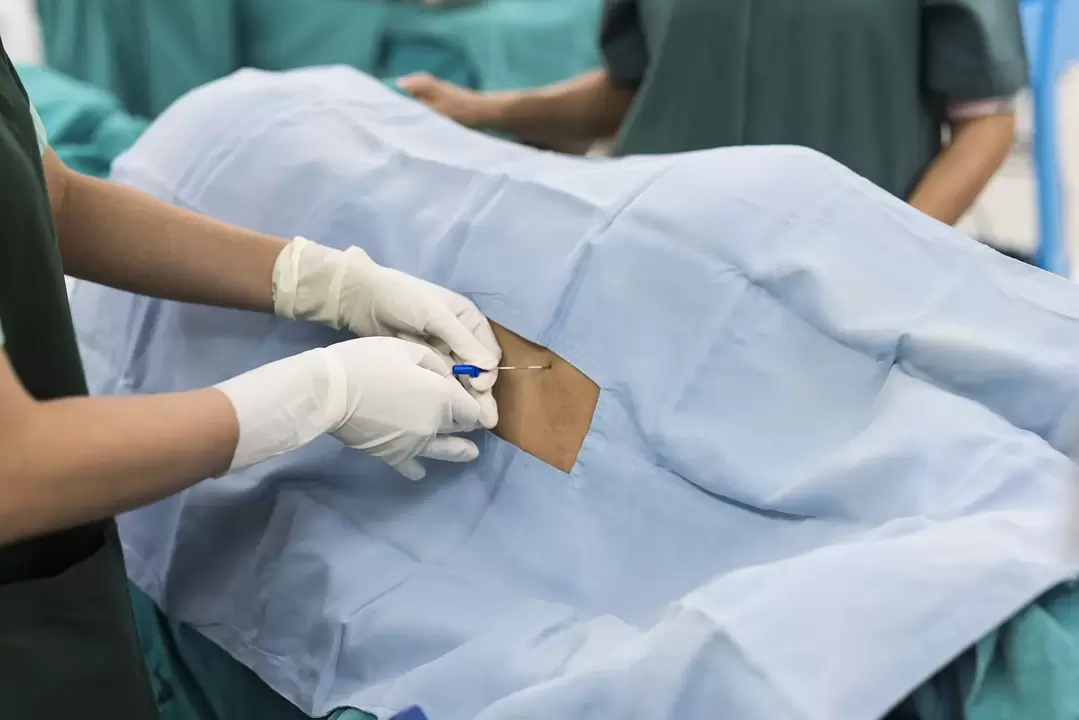
If the doctor suspects an infectious disease of the central nervous system, polyneuropathy and other diseases of the central nervous system of various etiologies, he will prescribe a lumbar puncture.This method is widely used in neurology.During the procedure, the patient is placed under spinal anesthesia, or spinal anesthesia, where the patient is injected with an anesthetic into the subarachnoid space.The injection is given as close to the spinal nerve roots as possible.
Drug treatment
When the first symptoms occur, most people solve the problem with anti-inflammatory and pain-relieving medications.To achieve a therapeutic effect, the following drugs are used:
- Analgesics with a pronounced analgesic effect based on metamizole sodium or nalbuphine;
- Nonsteroidal anti-inflammatory drugs that act directly on the site of inflammation and effectively relieve swelling;
- Muscle relaxants, which reduce muscle tone and relieve tension;
- Local analgesic and anti-inflammatory ointments.
The doctor can prescribe both tablets and ampoules, which have an immediate effect.As a complex therapy, ointments or gels that relieve swelling and chondroprotectors are prescribed.This group of drugs restores joints and has an anti-inflammatory effect.
Physiotherapeutic procedures
In addition to drug treatment, the patient is prescribed physiotherapeutic procedures.This could be therapeutic yoga, special massage or treatment with mineral waters and mud.To choose the right gymnastic exercises and procedures, you must consult a doctor who will prescribe therapeutic courses.In some cases, stretching exercises can make things worse, so doing physical therapy on your own is not recommended.

Another treatment method is manual therapy.The specialist first performs a manual massage to prepare the soft tissues for further exposure.After which it moves to the joints and spine.Such manual manipulations effectively help improve blood flow and relieve pain.And the deep impact on the back muscles allows you to remove tension and swelling.
Some specialists prescribe electrophoresis to the patient.This method is based on constant electrical discharges that are applied to diseased areas of the body.The method has the following advantages: reducing inflammation in the muscles of the back and neck, relieving swelling and pain, reducing muscle tone, improving blood supply to back tissues.The therapeutic effect is observed after the first procedure.